Fairness aware deep reinforcement learning for grant-free NOMA-IoT networks


Yazarlar (1)
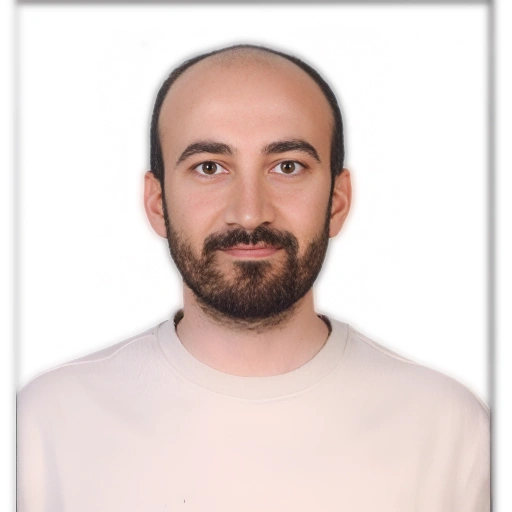
Dr. Öğr. Üyesi Abdullah BALCI Yalova Üniversitesi, Türkiye
| Makale Türü | Özgün Makale (SSCI, AHCI, SCI, SCI-Exp dergilerinde yayınlanan tam makale) | ||
| Dergi Adı | Internet of Things Netherlands (Q1) | ||
| Dergi ISSN | 2542-6605 Wos Dergi Scopus Dergi | ||
| Dergi Tarandığı Indeksler | SCI-Expanded | ||
| Makale Dili | İngilizce | Basım Tarihi | 04-2024 |
| Kabul Tarihi | – | Yayınlanma Tarihi | 01-04-2024 |
| Cilt / Sayı / Sayfa | 25 / 1 / 101079–0 | DOI | 10.1016/j.iot.2024.101079 |
| Makale Linki | http://dx.doi.org/10.1016/j.iot.2024.101079 | ||
| UAK Araştırma Alanları |
Haberleşme
|
||
| Özet |
| Next generation networks have special areas related with the Internet of Things (IoT) to improve the performance of cellular networks in terms of throughput. Grant-free non-orthogonal multiple access (GF-NOMA) seems a feasible solution, letting machine type communication (MTC) devices transmits their packets when they ready to transmit. GF-NOMA increases the spectral efficiency by using the superimposing signals with different power levels over the same time and frequency resources. However, the main drawbacks of GF-NOMA are randomness and the management of power level selection of MTC devices. In 6G-IoT networks, the intelligence should be met to random access. It is time to design new access methods to solve the GF-NOMA issues that should be between the randomness and fully coordinated medium access. Deep-Q-Network (DQN) has become a very hot research topic in recent years that let … |
| Anahtar Kelimeler |
| Aloha | Grant-free access | Internet of Things | Machine learning | NOMA | Random access |
Science Direct
Fairness aware deep reinforcement learning for grant-free NOMA-IoT networks
BM Sürdürülebilir Kalkınma Amaçları

| Atıf Sayıları | |
| Web of Science | 7 |
| Scopus | 11 |
| Google Scholar | 13 |